
Video-Assisted Thoracoscopic (VATS)
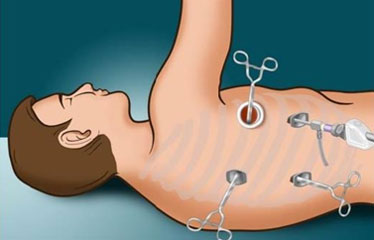
Video-Assisted Thoracoscopic (VATS)
Video-Assisted Thoracoscopic Surgery (VATS) is a modern, minimally invasive surgical technique used to diagnose and treat diseases of the chest, including lung cancer and other thoracic malignancies. As an experienced surgical oncologist specializing in minimally invasive cancer surgery, I, Dr.AnadiPachaury, offer advanced VATS procedures in Shalimar Bagh, Delhi, with the aim of delivering precise cancer treatment while ensuring faster recovery and better quality of life for patients.
VATS has transformed thoracic surgery by replacing large chest incisions with small keyhole incisions, allowing surgeons to perform complex cancer surgeries with minimal trauma to the body. This technique has become the preferred approach for early-stage lung cancer and selected thoracic tumors, offering outcomes comparable to open surgery with significantly fewer complications.
What is Video-Assisted Thoracoscopic Surgery (VATS)?
Video-Assisted Thoracoscopic Surgery (VATS) is a minimally invasive surgical approach that allows surgeons to operate inside the chest cavity using a high-definition camera (thoracoscope) and specialized surgical instruments. Instead of making a large incision and spreading the ribs, VATS requires 2–4 small incisions, usually less than 1–2 cm in size.
The thoracoscope provides magnified, high-resolution images of the lungs,
pleura, mediastinum, and chest wall, enabling accurate identification and
removal of cancerous tissue. This enhanced visualization allows for greater
precision, reduced blood loss, and improved surgical outcomes.
Conditions Treated with VATS
VATS is widely used for the diagnosis and treatment of various thoracic and lung-related conditions, particularly cancers. Common indications include:
- Early-stage lung cancer
- Thoracic tumors
- Pleural tumors and pleural effusion
- Lung nodules
- Mediastinal masses
- Metastatic lung lesions
- Diagnostic lung biopsies
- Pleurodesis for malignant pleural effusion
As a thoracoscopic surgery specialist in Shalimar Bagh, I carefully
evaluate each patient to determine whether VATS is the most appropriate
and safe option based on tumor stage, location, and overall health.
VATS for Lung Cancer Treatment
For patients diagnosed with early-stage lung cancer, VATS has emerged as a gold-standard surgical option. Procedures such as VATS lobectomy (removal of a lung lobe) or segmentectomy can be performed with the same oncological principles as open surgery, including complete tumor removal and lymph node dissection.
Numerous studies have shown that VATS lung cancer surgery offers:
- Equivalent cancer control compared to open surgery
- Lower postoperative pain
- Reduced complications
- Faster return to normal activities
By combining oncological precision with minimally invasive
techniques, VATS plays a vital role in modern lung cancer
management.
Advantages of Video-Assisted Thoracoscopic Surgery (VATS)
One of the main reasons patients and surgeons prefer VATS is the wide range of benefits it offers over traditional open thoracic surgery.
-
Minimal Invasiveness:
Small incisions reduce trauma to muscles and ribs, resulting in less postoperative discomfort. -
Reduced Pain:
Patients experience significantly less pain after VATS compared to open chest surgery. -
Faster Recovery:
Most patients recover quicker and can resume daily activities sooner. -
Shorter Hospital Stay:
Hospitalization is usually shorter, reducing overall treatment costs and stress. -
Better Cosmetic Outcome:
Smaller scars lead to improved cosmetic results. -
Lower Risk of Complications:
There is a reduced risk of infections, bleeding, and respiratory complications.
As a surgeon with extensive experience in advanced
minimally invasive oncology, my goal is to maximize
these benefits while ensuring complete and safe cancer
removal.
How is the VATS Procedure Performed?
VATS is performed under general anesthesia. During the procedure, the following steps are carried out:
- Small incisions are made on the chest wall
- A thoracoscope with a high-definition camera is inserted
- Specialized instruments are used to remove the tumor or affected tissue
- Lymph nodes may be removed for cancer staging
- A chest drain is placed temporarily to help lung expansion
The procedure typically lasts 2–4 hours,
depending on the complexity of the case.
Recovery After VATS Surgery
Recovery after VATS is generally smooth and quicker compared to open thoracic surgery.
- Most patients are able to walk within 24 hours
- Chest drains are usually removed in a few days
- Pain is manageable with oral medications
- Patients can return home earlier
- Normal activities can be resumed within a few weeks
Post-operative care focuses on pain control, breathing
exercises, early mobilization, and follow-up imaging to ensure
optimal recovery.
Who is a Suitable Candidate for VATS?
VATS is suitable for many patients, but not everyone. Ideal candidates include:
- Patients with early-stage lung cancer
- Individuals with localized thoracic tumors
- Patients fit for general anesthesia
- Those without extensive chest adhesions
A thorough evaluation including CT scans, PET scans, pulmonary
function tests, and biopsy results is essential before deciding
on surgery.
Why Choose Dr. Anadi Pachaury for VATS?
Choosing the right surgeon is crucial for successful cancer treatment. As Associate Director & Unit Head (Surgical Oncology) at Max Hospital, Shalimar Bagh, with over 20+ years of experience, Dr. Anadi Pachaury brings:
- Expertise in advanced laparoscopic and thoracoscopic oncology
- Training from Tata Memorial Centre, Mumbai
- Experience in managing complex and recurrent cancers
- A patient-centric approach focused on function preservation and quality of life
- Access to advanced infrastructure at Max Hospital, Shalimar Bagh, Delhi
The practice emphasizes precision, safety, and compassionate
care, ensuring each patient receives a personalized treatment
plan.
VATS vs Open Thoracic Surgery
| Feature | VATS | Open Surgery |
|---|---|---|
| Incision size | Small | Large |
| Pain | Less | More |
| Hospital stay | Short | Longer |
| Recovery time | Faster | Slower |
| Cosmetic result | Better | Visible scar |
Whenever oncologically appropriate, VATS is preferred due to its
minimally invasive nature and patient benefits.
Commitment to Patient-Centered Cancer Care
Every cancer journey is unique. The approach to VATS and thoracic oncology is rooted in evidence-based medicine, advanced technology, and empathy. A multidisciplinary team including medical oncologists, pulmonologists, radiologists, and anesthetists works together to deliver comprehensive cancer care.
Consultation for VATS Surgery in Shalimar Bagh, Delhi
If you or your loved one has been diagnosed with lung cancer or a thoracic condition, early evaluation is crucial. Video-Assisted Thoracoscopic Surgery (VATS) may offer a safer, less painful, and highly effective treatment option.
To learn more about VATS surgery in Shalimar Bagh, eligibility, benefits, and recovery, consult Dr. Anadi Pachaury, a trusted thoracoscopic surgery specialist dedicated to advanced cancer care.